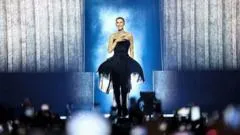
Céline Dion performed her first full concert in six years at Paris La Défense Arena on Saturday night. The Canadian singer, diagnosed with stiff person syndrome, cried during the emotional show. Fans left the venue singing and dancing to her hits while some wiped away tears.
Céline Dion’s appearance marked her first complete concert since 2020. The neurological condition stiff person syndrome had forced her to cancel multiple tours and withdraw from public performances. She became visibly emotional on stage as the audience responded with sustained applause. The Canadian singer cried as she made an emotional comeback to the stage after the rare disorder diagnosis. No further tour dates have been announced following the performance.
Fans react with joy and tears
People spilled out of the arena singing her classic songs and dancing in the streets. Some remained in tears long after the final note. Joyful fans spilled out of the Paris La Défense Arena on Saturday night singing and dancing to her classic hits, while some were still wiping away tears. The event drew widespread attention across France, where supporters described it as the biggest comeback since Charles de Gaulle. Fans continued to sing and dance as they exited the venue.
Context of the performance
Paris correspondent Hugh Schofield attended the show and noted the intense connection between the singer and her French audience. The concert took place at La Défense Arena, one of the largest indoor venues in the city. Hugh Schofield reflects on getting swept up in the Dion dalliance that French fans are calling the biggest comeback since Charles de Gaulle. The rare neurological disorder called stiff person syndrome had kept the singer away from full concerts for six years.
Key takeaways
First full concert in six years after stiff person syndrome diagnosis
Emotional performance at Paris La Défense Arena
Fans sang, danced and cried after the show
Described as biggest comeback since Charles de Gaulle by French fans
Anya Sharma brings a deep understanding of Politics and Culture to her analysis, exploring how global power dynamics intersect with societal norms and artistic expression. She is particularly adept at uncovering the subtle ways political decisions shape cultural landscapes and how cultural movements, in turn, influence political discourse across AF. Her work ranges from incisive daily analyses of unfolding international events to comprehensive explainers that unpack complex geopolitical shifts, and often extends to longer, investigative pieces that trace the historical and cultural roots of contemporary conflicts. Anya's approach to a story begins with meticulous research into both official policy documents and grassroots cultural narratives. She cross-references information from a wide array of sources, including academic journals, local media, and direct conversations with community leaders and cultural practitioners, ensuring that her reporting is both authoritative and nuanced. She is known for her rigorous fact-checking process, verifying every detail against multiple independent sources to ensure accuracy and impartiality. Readers who follow Anya's reporting gain a sophisticated understanding of the interconnectedness of global politics and cultural identity. Her insights offer clarity on why certain regions respond to political developments in specific ways, and how cultural values often underpin national interests, providing a richer, more holistic view of world events than is typically found in conventional geopolitical reporting.